What is a Family Council? And why are Family Councils (FCs) so important? As more long-term care homes are opening to meet the needs of a growing older population, the FCO team is frequently asked these two questions. Each time, they explain how much family councils contribute to improving the daily life of residents in long-term care. FCO helps family caregivers build strong family councils by offering councils step-by-step guides, tools, resources, and support in dealing with challenging issues. Education is at the heart of this work: it helps family councils and long-term care staff build strong relationships and work through challenges together. As needs keep growing across the province, FCO keeps building new, evidence-based approaches that respond to real issues and the strain family caregivers face.
As I step into the role of Board Chair, I want to reflect on FCO's growth this past year. This growth would not have been possible without the ongoing support of the Ministry of Long-Term Care, and we are grateful for it. With this new funding, our operations team grew: we expanded across the province and added new roles. These new roles help us respond faster to requests for support, share stronger insights for policy development, and connect better with our growing community. The team also built on last year's foundational work, putting our action plan into action so we can deepen our impact with family councils and long-term care staff — and start reaching them earlier, before challenges reach a crisis point.
This year, we built the framework and tools for our new "Champions" pilot program. This program is central to one of our biggest goals: helping family councils become sustainable and effective, with councils in 75% of Ontario's long-term care homes by 2030. Through a network of "Champions," we believe we can help more family councils find a lasting path forward. Feedback from our first spring training was encouraging, and we look forward to sharing more later this year.
This year, we grew our communications across every channel to connect better with caregivers, family councils, and long-term care staff. In early 2026, we launched a refreshed website, making it easier to find information and resources, and added valuable new tools, including our Tool Kit, "Your Guide to Starting and Maintaining a Family Council," and a set of eLearning courses. Our newsletter was also redesigned, and each issue is now packed with FCO updates and articles on timely topics. Our social media presence grew as well, giving us another way to reach caregivers, family councils, and long-term care staff with news and resources. If you're not already following us on social media, now's a great time to start.
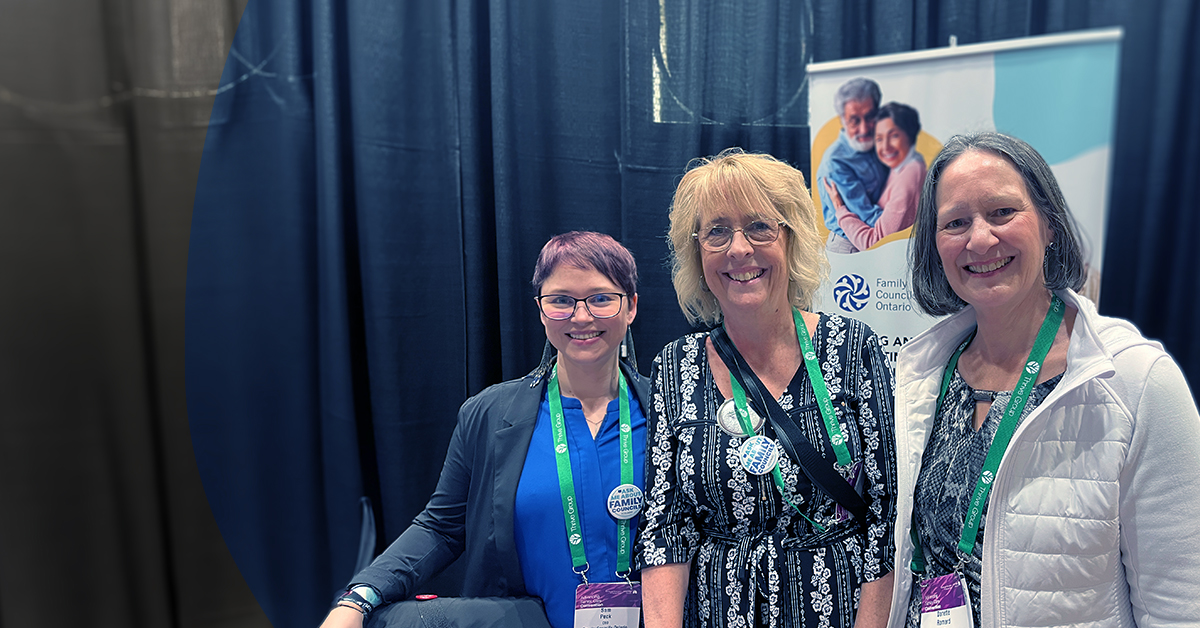
FCO continued building relationships with our industry partners this year, creating opportunities to share knowledge, raise awareness, and elevate the voices of family caregivers. We were invited to speak about our work at conferences hosted by AdvantAge Ontario and the Ontario Long-Term Care Association, and we co-hosted webinars with partners including the Alzheimer's Society and the Canadian Association of Retired Persons. These partnerships help ensure family caregivers' experiences shape the broader conversation about the future of long-term care.
Our Board has seen change too. Our former Board Chair, Kathryn Pilkington, stepped down after completing her six-year term, and we are grateful for the leadership and commitment she brought to FCO. We welcomed three new Directors to the Board, and this fall we look forward to coming together with the operations team to build our next strategic plan.
We have an exciting year ahead. We remain committed to evidence-based, results-driven work: education that builds strong relationships and lifts the voices of family caregivers. Looking ahead, we will build on this foundation by moving further upstream — anticipating emerging needs, helping inform system-level solutions, and working proactively to strengthen the experience of family caregivers and their loved ones in long-term care.